
Written By:
Karen Bohnert
Chronic stress on farm animals, including dairy cattle can have harmful effects on their health, productivity and welfare. We, as dairy producers, try to reduce the amount of stress cattle receive by the way we conduct our animal routines and care, as well as diminishing environmental stress—so our dairy cattle can be healthy and productive as possible.
Dr. Leo Timms, Professor at Iowa State University, talks about the different stresses—environment, cattle care and routine that dairy cattle endure, by walking us through the day and life of a dairy cow. “We need to put ourselves in the life of a cow to understand what her fundamental needs are,” Timms says.
What is stress? Some believe stress is everything that makes you change and adapt. This holds true for individuals, as well as animals. More importantly, stress is not necessarily the events that come into your life that make us adapt; rather stress is related to how we handle or cope with these events and changes. Another important point is we tend to concentrate or focus on extraneous stressors (often short lived or happen occasionally like weather changes or practices like vaccination or dehorning) when in reality addressing and furnishing basic daily needs (food, water and air; shelter and rest) are the critical keys to success.
Resting Period
The goal of dairy cattle is to allow them to live to their potential—living a healthy and productive life. Walk in the hoofs of a dairy cow through the course of one day and you will understand what her fundamental needs are. “The biggest part of a cow’s day is resting or lying down,” Timms says. “On average a dairy cow rests or lies down for 13-14 hours a day.” This is hard for most people to comprehend as people only sleep 6-10 hours. It is also the reason why producers use sand, deep bedding, mattresses, etc to optimize this need.
Timms says that cows need more than just a place to lie down to cover this primary need—they need an area that is both clean and comfortable. “It needs to be clean to prevent disease and achieve milk quality,” he says. Our goal is to entice the animal into a clean, comfortable resting space with adequate room to lie down and get up properly and provide maximum vertical and horizontal cushion. “In order for cows to be healthy and productive—they must be comfortable,” he says.
Chow Time
The next chunk of a cows’ day is spent eating—spending between five and six hours a day eating various meals throughout her day. Cattle eat a balanced meal various times throughout the day—many fed through a total mixed ration process—which allows them to eat when they want. Timms advises that it is essential for cows to have the freedom to eat when they want and as much as they want. In addition, the food that they are fed must be a balanced ration to benefit both their health and productivity; the food must be accessible at all times, enforcing caretakers to push up feed regularly throughout the day; and the floor space and/or the bunk area needs to have a resilient cleanable surface and be kept clean—to prevent disease and entice eating.
Need a Drink of Water
“Lactating cows need to drink a lot of water through the course of a day,” Timms says. Dairy cattle drink about 30 minutes during the duration of a day—allowing them to drink large quantities at any given time. “Water is so critical—they can’t live without it and they certainly can’t be productive without it,” Timms says. With this basic need—access to water must be easily reached, so cows do not have to travel far to receive it. Just as importantly as the accessibility of water—is the quality of the water. Timms reminds us that the water tanks must be clean and water palatable and tasty. “Cows prefer water that is between 65-75 degrees,” he says. One way some producers achieve a more tempered water temperature is recycling the water that comes off a plate cooler. Providing cows clean, tempered water that they have easy access too—will allow her to drink as much as she wants, when she wants (saves energy and enhances milk quality also).
Gettin’ Milked
Many cows are milked twice a day; some three times. On average a cow spends about 30 minutes a day being prepped and actually milking. Obviously, this is a necessary need for the cow and requires dairy producers to establish strict milking routines. Caretakers create milking procedures for the sake of milk quality and care to the cow. “Cow health and milk quality go hand in hand,” Timms says.
Procedures such as stripping cows to stimulate milk let down and check for abnormal milk; applying disinfectant and skin conditioners to teats before and after milking to remove bacteria and provide udder care to the cow—is performed for the health and benefit of the cow. “How much time and attention is provided in that 30 minutes of milking per cow is extremely important,” Timms says. “It’s essential in providing health and safety of the cow and of the product that comes out of her.”
Movin’ On Up
Approximately two hours of a day, cows are socializing by moving around and getting “their” exercise. Most cows have this ability, even if they are in tie-stall facilities, as the caretakers allow them to get fresh air and go outside, unless it is bitterly cold. “They need this ability to move around at their own will,” Timms says.
For most cows, this time is being guided to the holding pen area for milking times. Some producers give cows cushioned rubber mats to stand on through the travel lanes and holding pen areas to promote extra comfort. “Our goal is to control time in the milking parlor holding area to less than one hour in order to maximize resting and eating opportunities,” Timms says.
Environments Role
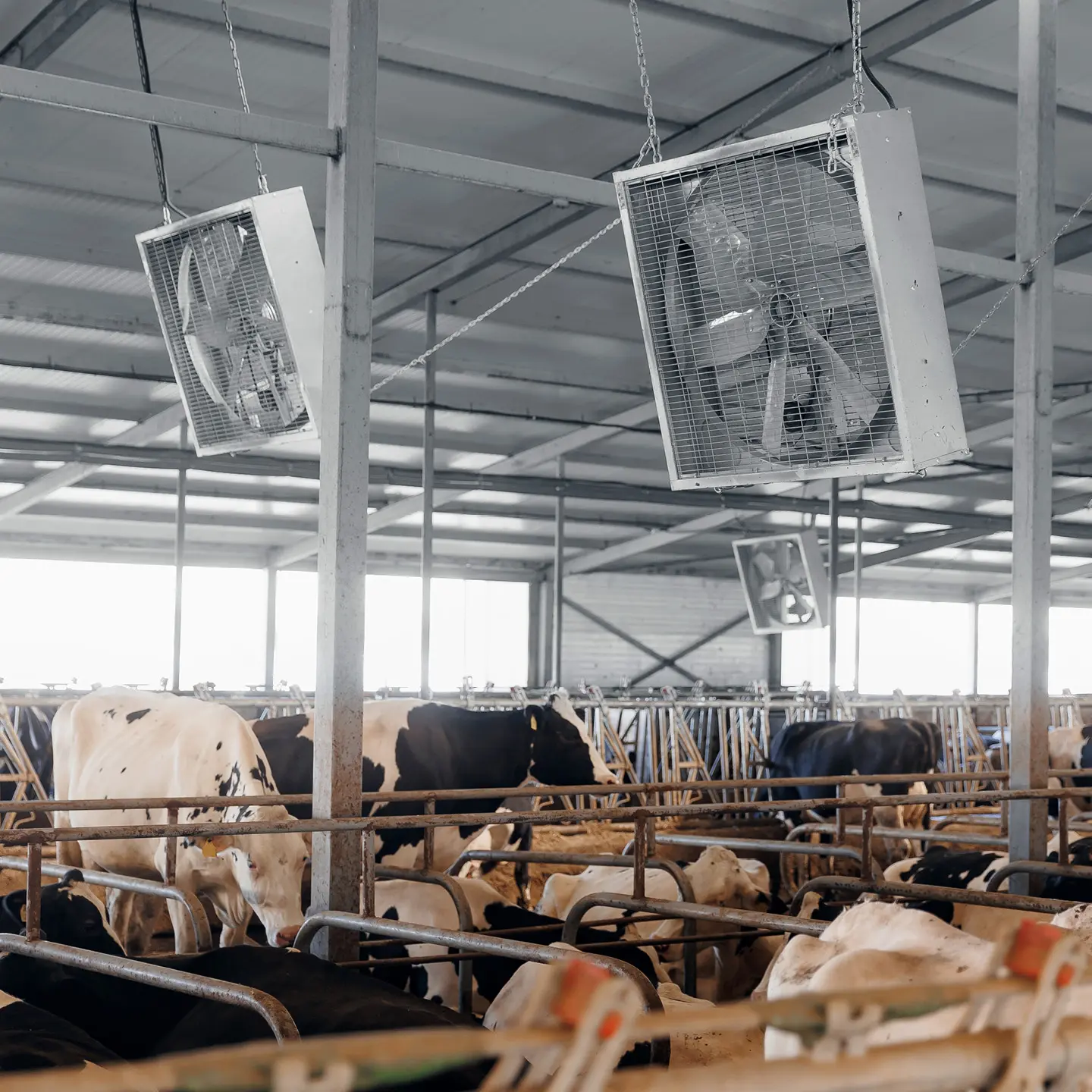
Environment is everything that surrounds us on a given day (food, water, facilities). We often think or focus only on the effect both temperature and humidity plays on the health of an animal. Timms says that the thermal neutral zone is the optimal zone where we (or cow) are the most comfortable. For cows this temperature is between 40 and 70 degrees. He also reminds us, that mature cows adapt better and easier than younger livestock. Calves thermal neutral zone is between 45-50 degrees. Caretakers provide natural ventilation, fans, and sprinklers and even with the newest form of cross ventilation barns—to control temperature, aid comfort and maximize performance of the cows. “When it gets hot—producers step up to provide a comfortable environment to minimize stress on animals,” Timms says.
Cows generally handle the cold a bit easier than the heat. “Cows generate heat through chewing their cud and being productive animals,” Timms says. “Cows can maintain body heat up to -30 degrees.”
Extraneous Stressors
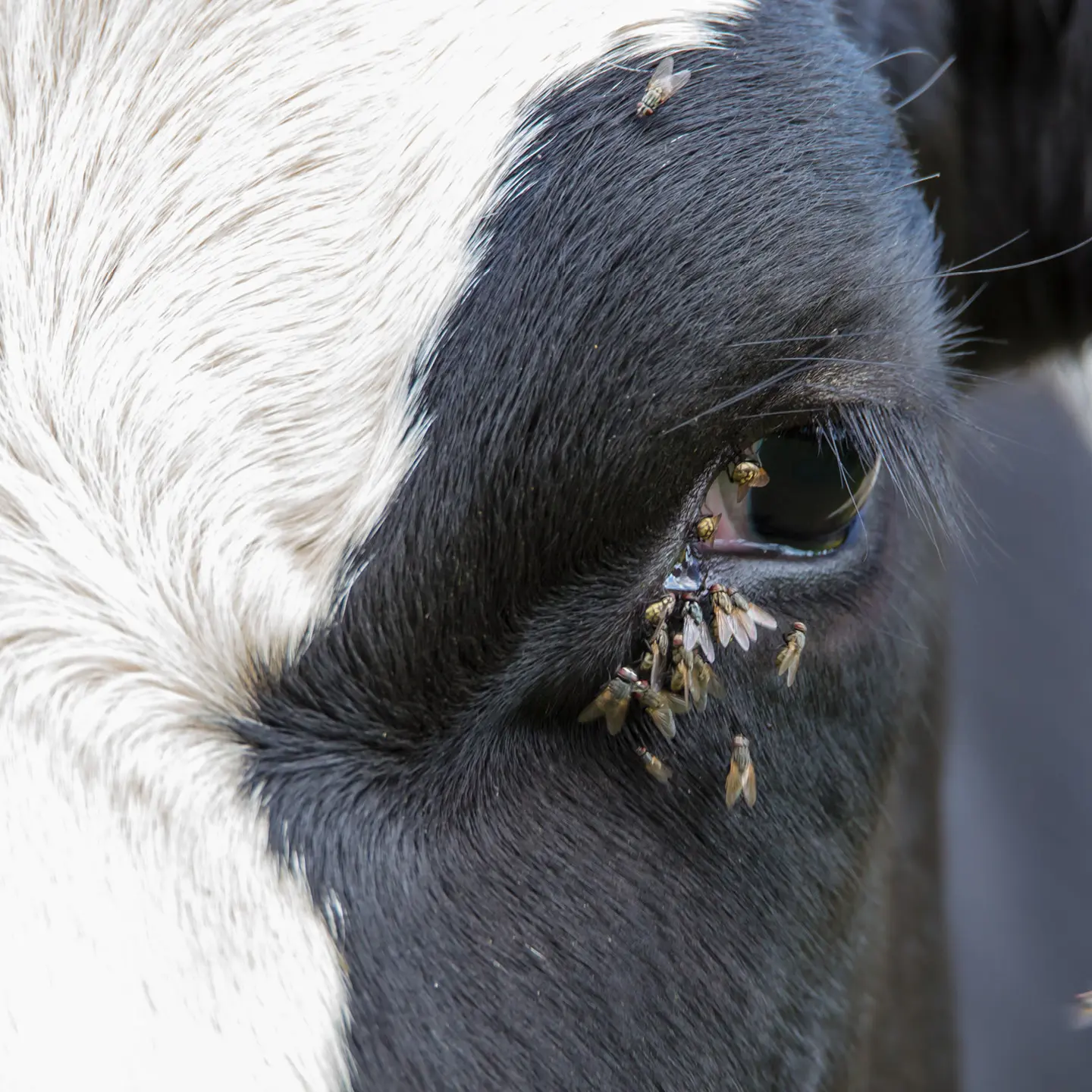
Away from the regular routine and care that goes into a day and life of a dairy cow—there are always extraneous activities that could cause stress to the animal. Practices such as vaccinations, dehorning, hoof trimming and so on—can present some stress to a cow’s day.
Vaccinations do not happen every day and cow handlers do everything to minimize stress. “The benefit outweighs the stress,” Timms says. This investment saves huge issues later on such as disease, comfort, quality of life and productivity of the cow.
When it comes to other issues such as dehorning and hoof trimming—again the benefit outweighs the risk. Dehorning has been conducted for decades to help reduce the risk of injury to cows and animal handlers. Both dairy farmers and veterinarians ensure the comfort and safety of an animal during this process through proper restraint, equipment, and techniques, and proper use of anesthesia and/or anti-inflammatory medication. Many herds regularly trim the cow’s feet to add long-term comfort and longevity to the cow and her performance. Hoof trimmers—either professional of conducted by farm personnel—have been trained to successfully trim cows’ feet—aiding comfort, eliminating disease
and improving her performance as a milk cow.
These are some of the individual management decisions that dairy produces make in their operation. They view these extraneous stressors as overall benefits to the cattle—and again, the benefits due outweigh the risk.
Think about it, we as dairy producers do put more concern and take better care of our cattle—than we do ourselves. With that being said, Timms reminds us that we really should think of the day and life of a dairy cow—ask what does her day look like—and how can we satisfy her fundamental needs—so she stays healthy and productive—and ultimately we are reducing the amount of stress that can enter into her life and greatly improve her adaptation to this when it does occur.
Bookmark/Search this post with: