
Compost Bedded Pack Barns

Is a compost bedded pack barn the best option for your dairy?
Associate Professor of Dairy Science, Marcia I. Endres, says answering that question involves numerous factors. "Each manager has to choose the system that works best for them," she explains. "Whether or not this is an efficient way for them to house their cows depends on many things, including the type of bedding materials that are available and economically priced, and how dedicated they are to managing the bedding to keep it aerated and dry."

Dairies with more than 200 cows may want to consider an alternative to a compost bedding pack barn if they plan to use a compost barn for all their cows. A large number of cows will produce enough manure to require a significant amount of bedding material.
"There is a dairy in China with 2,000 cows that was using the compost bedding pack barn," Endres says. "But they had tons of rice hulls and cotton straw they were using. Here we don't have easy access to those large amounts of bedding materials."
Endres notes that corn stalks by themselves don't make good compost bedding because they don't retain their structure once they absorb moisture. Because they break apart once they become wet, corn stalks need to be mixed with other types of material in order to effectively serve in a compost bedding barn.
"People have been using ground up straw such as soybean, rye and wheat straw," Endres says. "Wheat straw doesn't work well by itself. It needs to be mixed with something like sawdust. A producer in South Dakota is mixing wheat straw with corn stalks and that's working for him. In order to determine what materials work best for you, it's necessary to consider the cost and availability of that material and how well it might work in the pack."
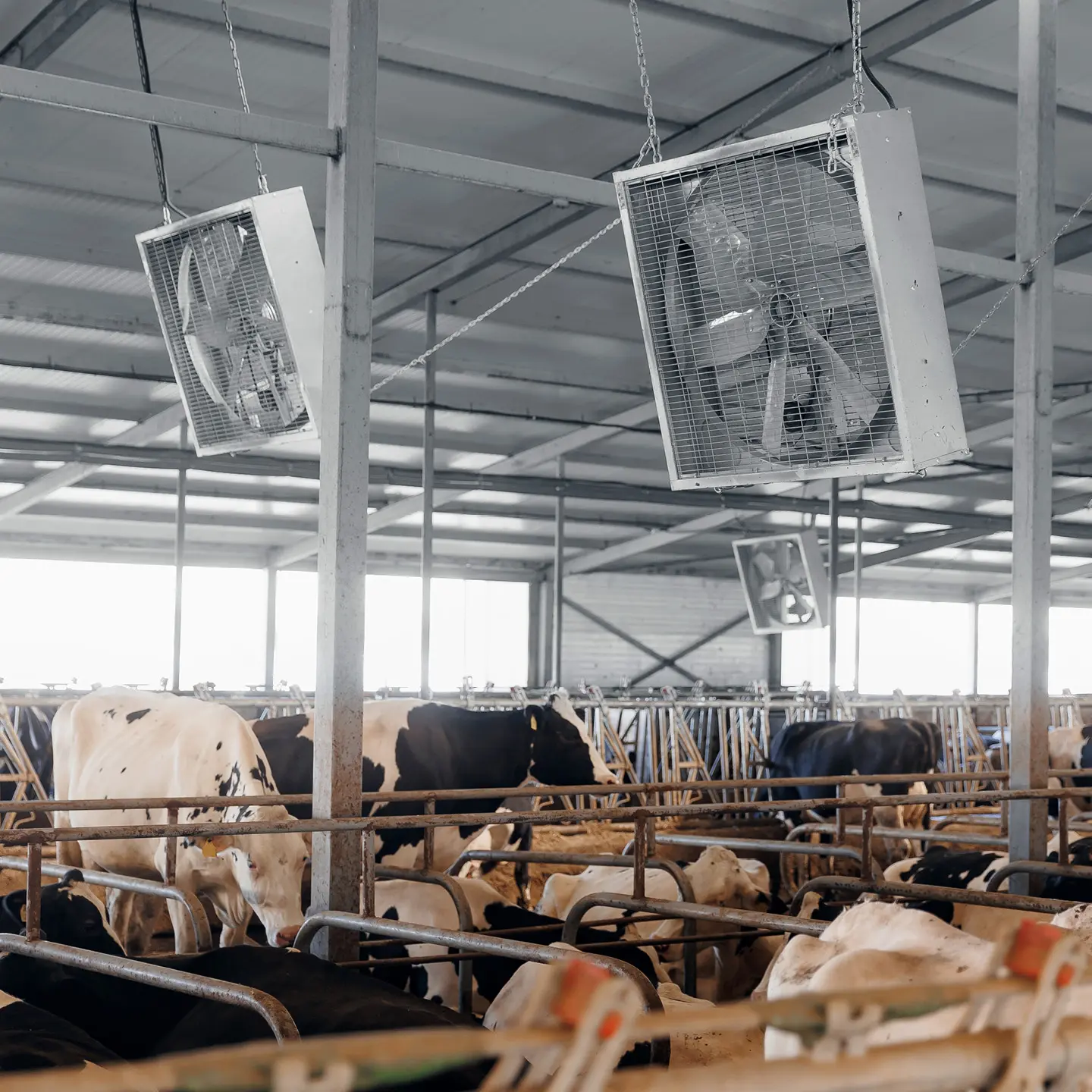
In the 2007 study Endres and her colleagues completed, they found that, in general, compost barns have a concrete feed alley, a bedded pack area and a four-foot-high concrete wall that surrounds the pack. The alley surrounding the pack has one to four walkways for cows and equipment used to access the pack. The bedding pack is aerated twice daily through use of a cultivator or chisel plow to incorporate manure into the pack and create a drier surface.
Benefits of the compost bedded pack barn include increased cow comfort and longevity. Cows have more room to roam freely. The barns can also provide a simpler means for producers to manage manure.
"The manure in the alley is scraped twice each day and stored in a pit or hauled daily," Endres says. "Producers report varying percentages of manure in the alley, ranging from 25 to 40 percent. That means that 60 to 70 percent of the manure is held in the bedding pack. That significantly reduces the size of the storage area that's needed. Typically, manure is removed from the pack itself twice each year, once in the spring and once in fall."
A key management technique in bedded pack barns is an effective prep for milking. While the bedded pack barn offers a relatively dry surface, mastitis pathogens are present and can cause problems.
“Making sure teat ends are clean greatly reduces the possibility for mastitis in this kind of system," Endres says. "In our study, we saw one situation where the producer installed a new parlor and the machines weren't properly regulated. He was seeing teat-end injuries and quite a few cases of coliform mastitis. There is microbial activity taking place in the bedding pack that generates heat, but that doesn't eliminate the pathogenic bacteria. There are coliforms, streps and staphs present."
In their 2007 study, Endres and her colleagues found that 89% of the participating dairies had a significant increase in 305 mature-equivalent milk production when moving their cows to the compost barn. The average increase was 2,105 lb/cow per year (with a range of 870 to 2,934 lb). In addition to utilizing the compost barn, other changes were made to the dairies, which likely contributed to the significant milk production increase.
"We found that 67% of the dairies had a reduction in mastitis infection rates compared to their previous housing system," Endres says. "However, only 43% of the dairies had a significant reduction in bulk tank SCC, with one dairy having a significant increase. In general, a low level of contagious pathogens was detected in the milk bulk tank samples. One out of 12 farms had a high level of /Streptococcus agalactiae/, one farm had a high level of /Staphylococcus aureus/, whereas six farms had high levels of non-ag /Strep/, and five farms had high levels of coliforms (e.g., /E.coli, Klebsiella, and Enterobacter/) in the milk."
Endres found it interesting to note that udder health and milk quality were not necessarily compromised when cows were housed in the bedded pack system, especially when total bacteria counts in the bedding material were 9,122,700 cfu/mL. Prior studies suggest that bedding have less than 1 million cfu/mL to reduce the risk for mastitis.
"That's what makes excellent cow prep procedures and health teat ends essential in this type of dairy barn system," she says.
Producers with large herds may consider using compost barns for portions of their herds, such as fresh cows in the first 40 to 50 days. Compost barns may also work well for cows with recurring lameness issues or for special needs groups.
"Keep in mind that you can't overcrowd cows in the compost barn," Endres says. "We recommend 80 to 85 square feet per animal in the bedded pack area. That allows more timid cows to escape from dominant cows and reduces the social stress. For fresh cows, that are experiencing a more stressful time during that period of lactation, 100 to 120 square feet per animal is best. If you don't allow enough space, the bedding is dirtier, somatic cell counts rise and cow comfort decreases. As with any system, optimal management is absolutely necessary to achieve desirable results."